


Sniffnet just reached 500k total downloads!
When I started developing Sniffnet nearly 4 years ago,
I’d have never imagined that a project born almost for fun could one day be installed
half a million times by people from all over the world.
I see each download as a person my tool helped to debug and better understand
their own network, and this is something that couldn’t make me happier.
While this might not seem a huge number compared to some enterprise applications,
from my point of view this is definitely a milestone worth celebrating,
especially considering that I’ve built Sniffnet from scratch as a solo maintainer,
and that most of this growth is surprisingly recent.
In fact, the last 10 months alone account for more than 200k downloads, and v1.5.0 (published just 72 days ago)
is already the most installed Sniffnet version with about 100k downloads.
Even if those are just numbers, I’m so proud of them
and have been counting down to the 500k mark for the past few weeks (yeah, I love numbers).
But now let’s cut the chatter and see some more in-depth statistics
(ok, I really love numbers).
Downloads by operating system
As you can see in the chart below,
the largest slice of Sniffnet’s audience (58%) uses Windows,
and this makes sense since Microsoft’s operating system is by far
the most widespread among end users worldwide.
macOS and Linux split the rest almost evenly, at around 21% each.
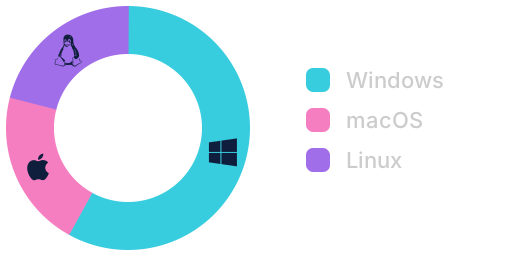
It’s curious to compare this with global OS usage stats: according to statcounter, Windows powers about 62% of desktops, macOS about 15%, and Linux just 3%.
Notably, Linux is far more common in Sniffnet’s user base than across the general population, as you’d expect for a tool especially appreciated by developers, network geeks, and the open-source community.
Official download statistics for Sniffnet packages on other OSes (for example FreeBSD and NetBSD) aren’t available, and that’s why they aren’t represented in the chart.
Downloads by source
Since Sniffnet is packaged in multiple ways, it’s also interesting to look at the source of the installs.

In this regard, GitHub releases is the clear winner with 82% of the share.
This isn’t a surprise since it’s the standard and recommended way to install Sniffnet,
and direct links to the GitHub-hosted executables are prominently
highlighted both on this website and the project README.
Despite this, there’s a fair number of users that prefer
the Rust package manager crates.io (10%), and macOS’s Homebrew (7%).
The tiniest fraction (1%) comes from the Docker image
I published less than a year ago, which only works on Linux.
Looking forward
A heartfelt thank-you to everyone who has used Sniffnet and shared feedback over time, and to the NLnet Foundation, whose support through the NGI Zero Commons Fund has allowed me to dedicate time to the project and focus on building the new features behind this milestone.
Sniffnet won’t stop here and I already can’t wait for the 1 million mark!
Let’s keep the snowball rolling and make network monitoring comfortable for even more people!